Localising video with AI without losing the brand
· 2 min read
Localisation is where AI changes the economics of video most clearly. A film that once needed a new shoot, a new voice session and a new edit for every language can now be adapted from one source. The risk is that speed beats accuracy. Here is how to keep both.
Localisation is more than translation
Translating words is the easy part. Localising means adapting video, audio and copy so they feel native: the right tone, the right references, the right pacing. The aim is cultural relevance and brand consistency in every language. A literal translation that sounds foreign has not done the job.
Keep the original performance recognisable
When Aalto University Studios wanted its Finnish-language lectures to reach students who do not speak Finnish, re-recording every course was not realistic. We produced video avatars and voice clones tuned to capture each professor's teaching style and tone. Students got material in another language that still sounded like their professor. Read the case study.
Design for updates
Hiab's safety training had to work in several languages and change as regulations changed. By presenting the content through an animated avatar, we made each new language and each revision an edit rather than a shoot. Think about updates from the beginning: content that will change should be built so that changing it is cheap. Read the case study.
Some languages need custom tools
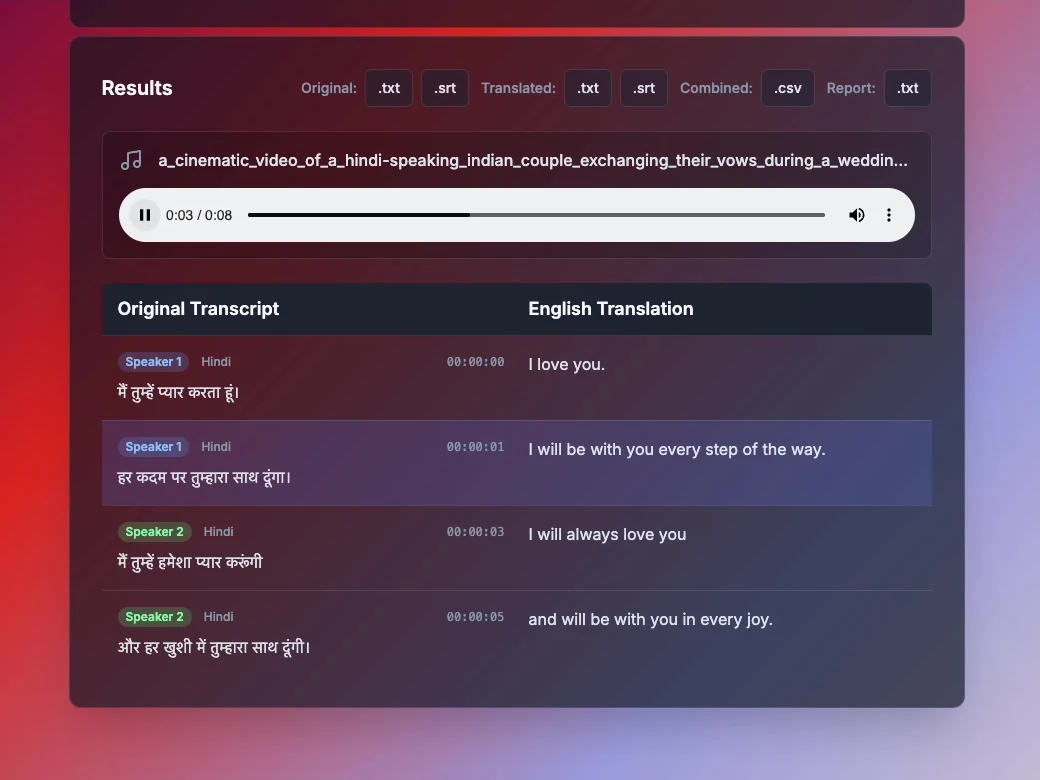
Fremantle had a wedding series shot in a minority language. Off-the-shelf speech tools did not support it and manual transcription was blocking delivery. We built a custom tool around a tuned speech pipeline: editors drag and drop audio files and get accurate, time-coded subtitles back inside software they already use. Where standard tools fail, a small custom tool can move the bottleneck out of the critical path. Read the case study.
A checklist for localising with AI
- Start from an approved source asset, so every version inherits the same quality.
- Decide where a native speaker reviews, and treat that step as required, not optional.
- Check brand terms, names and numbers in every language.
- Test languages with smaller tool support early, before you commit a schedule.
- Keep one place where all versions and their sources live.
Where this fits
Localisation is one of the building blocks of an AI media pipeline. If you are planning content for several markets, get in touch and we will help you work out what is worth automating.